This site is intended for US healthcare professionals only.

PsO HETEROGENEITY
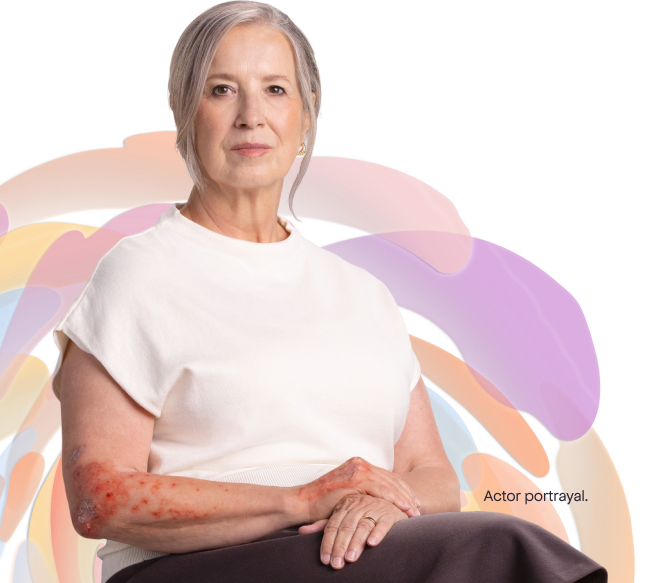
PsO is not uniform in nature—presentation varies across patients1-4
Because PsO is a heterogeneous disease, it manifests differently across patients1-4

Psoriasis can affect patients of all ages, body types, skin tones, and treatment histories.5,6
Plaques can vary in appearance,
location, and presentation5,6
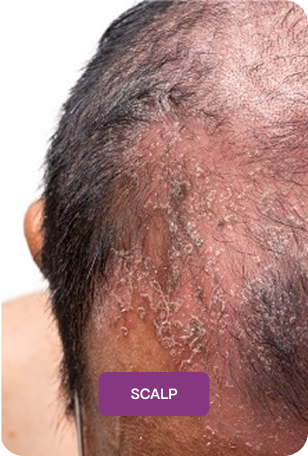
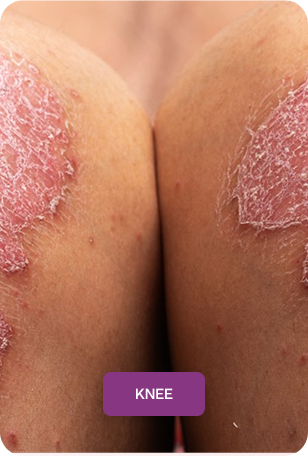
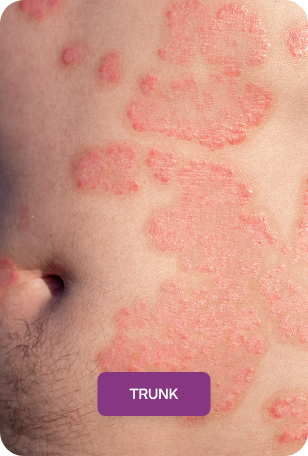
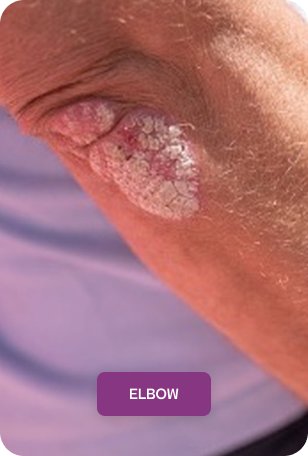
Plaque location plays a critical role in how patients experience their disease6
Places like the scalp, nails, palms/soles, and genitals are considered high-impact areas.6
These high-impact areas may carry a disproportionate burden because of7:

Visibility

Discomfort

Effects on quality of life
PsO also commonly affects the trunk, gluteal fold, and extensor surfaces.6
No two patients respond the same way, which could reflect heterogeneity in pathway activity beneath the surface.8,9


Look beneath the surface at the complex network of inflammatory signaling involved in PsO.2,10

Takeda’s commitment
Takeda brings 245 years of scientific experience to a renewed focus in
dermatology, applying its legacy of innovation towards advancing research and education in PsO.
Through continued collaboration, education, and an ongoing commitment to addressing unmet needs, Takeda aims to help
improve outcomes for people living with psoriatic disease.
PsO=psoriasis.
References
- Swindell WR, Xing X, Stuart PE, et al. Heterogeneity of inflammatory and cytokine networks in chronic plaque psoriasis. PLoS One. 2012;7(3):e34594.
- Armstrong AW, Blauvelt A, Callis Duffin K, et al. Psoriasis. Nat Rev Dis Primers. 2025;11(1):45.
- Conrad C, Gilliet M. Psoriasis: from pathogenesis to targeted therapies. Clin Rev Allergy Immunol. 2018;54(1):102-113.
- Singh R, Koppu S, Perche PO, Feldman SR. The cytokine-mediated molecular pathophysiology of psoriasis and its clinical implications. Int J Mol Sci. 2021;22(23):12793.
- Guo J, Zhang H, Lin W, Lu L, Su J, Chen X. Signaling pathways and targeted therapies for psoriasis. Signal Transduct Target Ther. 2023;8(1):437.
- Armstrong AW, Read C. Pathophysiology, clinical presentation, and treatment of psoriasis: a review. JAMA. 2020;323(19):1945-1960.
- Butacu A-I, Toma C, Negulet I-E, et al. Updates on psoriasis in special areas. J Clin Med. 2024;13(24):7549.
- Zhang S, Chang M, Zheng L, et al. Deep analysis of skin molecular heterogeneities and their significance on the precise treatment of patients with psoriasis. Front Immunol. 2024;15:1326502.
- Cantó E, Del Prado ME, Villarrasa E, et al. Transcriptomic identification of immune-related hubs as candidate predictor biomarkers of therapeutic response in psoriasis. Int J Mol Sci. 2025;26(17):8118.
- Sieminska I, Pieniawska M, Grzywa TM. The immunology of psoriasis-current concepts in pathogenesis. Clin Rev Allergy Immunol. 2024;66(2):164-191.